
Mentorship matters more than I understood when I was a student.
I didn’t even know how to ask for it, let alone know that I needed it. Then, as a younger teacher, I tended to over-offer mentorship to others as a form of course correction.
Now that I am older, I can see more clearly how formative it is to have experienced guidance along the way—and how much it can shape a musician’s confidence, motivation, and sense of possibility.
One of my early teachers, Lurames Mandel (born 1921), played an important role in my musical development. She studied at the Juilliard School of Music in New York, working with teachers in the lineage of Ivan Galamian and Dorothy DeLay, who is often quoted as saying, “People learn best when they’re having fun.”
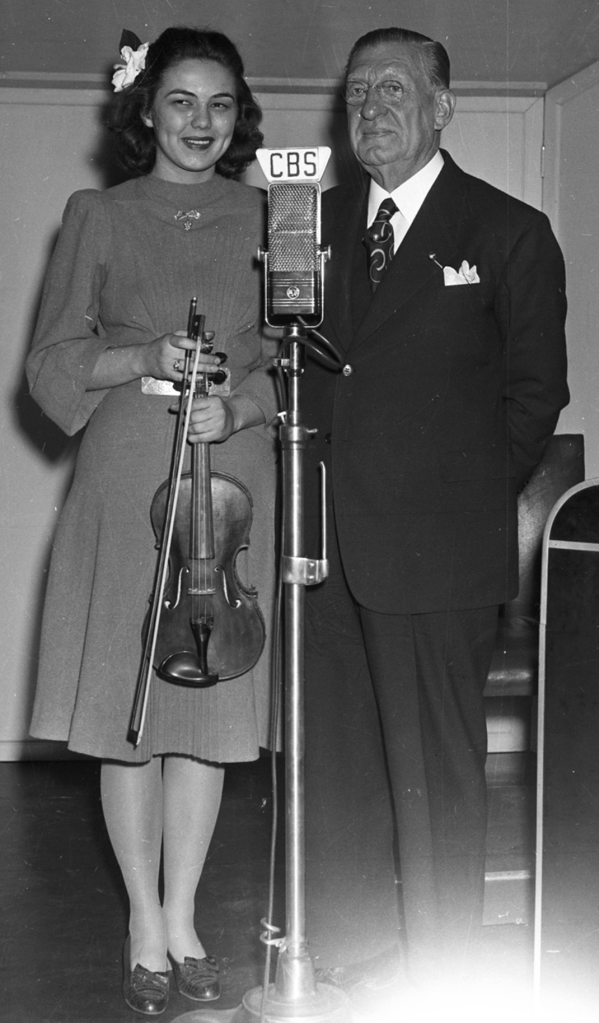
This photo of her performing at CBS studios, taken when she was 19 in the early 1940s, captures something of the musical world she came from—a world that valued performance, presence, and shared musical experience.
I was fortunate to study with her as a child. Her warmth and encouragement left a lasting imprint on me.
Looking back now, I can see more clearly how that mentorship shaped not only my technique, but my relationship to music itself.
This is part of what makes Suzuki culture so powerful: learning does not end with a lesson or a stage of training. It continues through relationships over time.
Coming soon: improvisation and its benefits.
 Debora Wrathall - Suzuki Violin Teaching Studio @ 9th and 9th, Salt Lake City, UT
Leave a comment